Category: Musings

  • Do We Actually Have Free Will? What Does It Mean If We Don’t?

    This is how much of a nerd I secretly am – the reward I was going to give myself for doing my tortuous taxes was an indulgent meditation around the idea that we don’t have free will and what this means for us. Like I was deeply excited to think about this, lol.

    This wasn’t just a make-work intellectual indulgence for me. My preoccupation was based on this premise: if someone lacks free will to make alternative choices, how can we judge them for behaving the way they did?

    Initially I had been thinking about this in terms of how this could cause us to reframe experiences with others: that thing that person said or did, the resentment you are holding onto, that thing you struggle to forgive, that asshole that cut you off in traffic. I mean you can be mad about it, I guess. But at some point you’re simply going to have to let it go. Because if there is no free will what choice did they have? How could you be anything but compassionate towards yourself and others?

    But there are huge implications in believing this. I haven’t really even explored the negative issues that could result from thinking we don’t have it. And the whole subject in general begs for something much more in depth and a lot more researched than a half baked, half understood, meandering blog post. But hey, you don’t need to read it, I just need to write it. This is my platform so here we go.


    What is Free Will

    So to be clear my view on free will means that we have a conscious choice over what we choose to do. This is slightly different than assuming someone doesn’t have responsibility for what they do – so from my perspective, someone still has authorship. In other words, and asshole can still be an asshole. But I acknowledge that it’s a fine line in double think here.

    I don’t want to speak for people, but I imagine many people hold the idea that something we do might be out of our general control, but from a big picture perspective, even these slips of control are all part of a more conscious direction we choose for ourselves.

    For example, there are people in this world who I do not view through a compassionate and empathic lens and not only am I aware of this choice, I am okay with it, too. Maybe a micro expression of contempt shows in my face when the subject of that person some up. Letting my feeling leak out may have not be entirely intentional, but the fact I have made a decision not frame that person through a compassionate and empathic lens could be considered an act of free because I know I could have worked to see them differently.

    But I wanted to emphasize consciousness because ants for example who are considered to act only in service of the group, do demonstrate self-control (i.e. the ability to choose a large delayed reward over a small immediate one). From an ants perspective people might find it easier to image that the choices might be a bit more instinctual. But we can’t assume from this ants are consciously making a “choice”.

    So in this way free will might actually be a discussion about consciousness, and consciousness is something that still remains a mystery to us.


    Compelling Evidence There is No Free Will

    Despite that feeling that we don’t actually have free will could lead to greater compassion, on deeply some level it’s a disturbing concept. But from a psychological level and a neuroscience level, the idea that we don’t have free will is pretty compelling.

    Let’s look at some ideas. The first is an idea in physics (and I am not even competent on any kind of level of physics so just bear with me) that suggests that the current state of the universe is dictated by it’s past, suggesting determinism. That is, if someone had the intellect to know the exact position and momentum of every atom, it would be possible to calculate the past and future with precision.

    It’s at this stage in my musings that I want to argue for emergence – the idea that the whole is greater than the sum of its parts and it (quite literally) take on a life of it’s own. I guess that it could still be argued that it doesn’t at all rule out determinism.

    But logically speaking, that an atom becomes a chemical, and a chemical becomes a molecule does not suggest that all of it could not have been predicted. However, when we think about a sphere of influence, does consciously making a choice affect the behavior of atoms? Physicists understand more than I do about the different forces. But in consciously choosing, what force acts on those atoms, then?

    Then there was this other idea that got me excited for a bit, that chaos on the quantum level suggests that nothing is predetermined. In fact there are some theories that maybe this is where consciousness lives (based on what I can tell, this is based on absolutely nothing but an idea and maybe the fact that we don’t really understand quantum mechanisms).

    But I understand that at the sub atomic level of particles we have no evidence that anything in the past dictates the behavior of particles, and that there is randomness. This is quite compelling (even if I my brain hurts when trying to learn about quantum mechanics and theories)!

    But MIT physicist Max Tegmark mathematically ruled this out because there is such a scale difference between subatomic particles and a molecule. He calculated 23 orders of magnitude in the, if I got this right, scale differences.

    And for us non-mathy types, this means 100,000,000,000,000,000,000,000. That’s how much the subatomic effect would have to scale up to influence a molecule. And I hadn’t thought about this, but of course what this mean is that any randomness subatomic level would be reduced to averages before they could influence the behavior of a molecule.

    But then Neil deGrasse Tyson an Robert Sapolsky argue, that even if you could argue it’s random, then it’s randomness. It still doesn’t indicate that we have any more control.

    But because I have probably done more reading on the brain, the most compelling evidence to me are the studies in which fMRIs show there is activity in our brain before we are conscious of intending to do a voluntary act. 1

    So damn.


    Why do we Feel Like We Are Making Choices

    I realize that much of my personal reality is shaped by the idea that everything that we are or have the potential to be, originates from a biological utility. This including our emotions and motivations. That biological logic is based on the idea that our various human qualities are useful for our survival and evolution as a species. This is because I can’t ignore the highly sophisticated, complex biological ways in which our bodies operate.

    So naturally the sticking point for me if we truly have no free will, why do we feel so strongly that we do?? And why do we feel it’s so important to have the freedom to choose? There must be some point to it.

    Studies suggest that when we are exposed to the idea that our behavior is predetermined, we are more likely to cheat, steal, act aggressively or otherwise act in ways that is not in societies best interests. 2 3 4 It’s quite a fascinating concept. It implies that we are prone to succumbing to our worst impulses if it weren’t or a sense of agency over the outcome.

    Why have the feeling at all? Why not just have this built into our subconscious or unconscious and have this running in the background?

    I thought perhaps if we believe we all have agency, then this leads us into applying pressures on those around us to behave in certain ways. My judgement will trigger your guilt and/or shame and vice versa and we will modify our behavior accordingly. As a result we will all be a little less likely to do things that serves our self-interest at the expense of the group.

    So why not create a being then just simply serves the group (this was how I found myself reading academic papers on ants, lol)? Based on lens in which I view things, I can only assume our survival sometimes needs to step into our lesser selves. In some cases we need to prioritize our own well being over others. Clearly we need to be influenced by those around us, and yet at times, act in our own best interests.

    But it still doesn’t quite get to the answer of why we need to feel we have made a decision and how the feeling itself is important.


    The Feeling of Free Will, More Than Society Control

    The feeling of agency is critical for us, and even dictates the level of stress we experience in certain circumstances. If the free will was only about morals, I can’t help but wonder why it bleeds into other area of our human experience.

    Studies have repeatedly shown that we feel we have some control, we can handle stressful experiences much better. Studies of learned helplessness have also indicated that when we learn that nothing we do can influence the outcome of a repeated negative event, we eventually give up and do nothing even when escape later could be possible.

    Additionally, people experience psychological reactance when we perceive certain freedoms are being threatened, or our choices are being limited. Psychological reactance is the phenomena of being motivated to regain a freedom after it’s been lost or threatened and usually accompanies resistance, feeling uncomfortable or even hostile. We frequently see this in marriages, work environments and families.

    We just don’t want to be pressured or compelled to do something by someone or something else. Just think about those times when someone has tried to manipulate or compel you to do something or think a certain way. It explains why the “hard sell” so often fails. Why teenagers rebel only to later to fall in line once they have move into full independence?

    Either way, it’s clear that feeling like we have the free will to choose and the ability to make our own decisions whether its behalf of our selves or others, is incredibly important to us.


    Can We Even Live It?

    In that particular interview the thing that stick with me the most at the moment though, is how Robert Sapolsky hasn’t believed we have free will since he’s been 14. And yet says something to the effect that he is only able to fully experience the idea of this for maybe 3 minutes a month (don’t quote me on the exact numbers here, but enough to say for only a tiny fraction of time). If someone compliments him, he still feels good. He still experiences road rage. Like the ego will still be the ego. This is significant. The knowledge and only affect the experience only to a degree.

    So damn again. If he can’t do it, then perhaps this rabbit hole really is just an intellectual indulgence.

    I asked myself before I went down this rabbit hole: why not just adopt the idea we have no free will if it means I will be more compassionate with others and even myself? It’s the the first time I have encounter the idea that we don;t have free will. Why not just act as if. Look how knowing that we are not always responsible for certain outcomes have lead to greater compassion in our society (schizophrenia, homosexuality, etc.).

    Just act as if. The question lead me down a path of how I feel I can’t just adopt something I don’t entirely believe in, I need to feel there is a basis of rightness and truth (even while understanding how hypocritical that is given the human tendency towards bias and rationalization and so on). Even while exploring the different ideas and concepts, I’ve been asking myself – you really have enough evidence, why not just act as if?

    The real question around free will that is the impetus behind all this: Why get worked up by anything anyone does? Why not just let go of things I am still holding on to? Why not just forgive yourself?

    All the way skimming right by the realization that I can’t even think in a way to assume I don’t have free will.

    Before I wrote about this, I felt my life snapping back to exactly what it was only moments later. After I spent some time really thinking about this, I thought it would be easier. Sure. I thought about it. For brief moments at a time. Then snap. There it is. The distraction of regular life.

    Clearly this is a practice.


    How to Move Foward

    I suppose that when all is said and done, the best I can hope for is to have an intellectual framework, that after I catch myself judging, being angry, being full of myself, taking credit, blaming, is perhaps a second thought will come and remind me that none of us could have written a single line of the past any differently. There is something real feeling to the idea that there is no point wishing things could have been different. If it was going to turn out differently it would have. If I was meant to have a different present it would have turned out that way. We did the best we could, with what we knew and had available to at the time.

    Moving forward, I think the concept of determinism can be incredibly useful to forgive the past and to encourage compassion towards others. And for sure, we are not nearly as much in control of things as we think we are.

    But when it comes to think about the future, and the impulse to make a choice, the truth is we don’t actually know where the limits of our free will lie.

    But at the end of the day, as adaptable as we are, we are also incredibly habitual. There is a reason why the school and university systems exist. Like with anything, any kind of change takes a system in which it’s introduced constantly, over and over. You want change in your life, it might help to build a curriculum for yourself. Learn it, study it, turn up for it. And you’ll see, if you don’t really want change, you’ll have all sort of excuses. “I can’t dedicate the time, there are other things I have to deal with right now…, this is not a top priority right now…” Ok. You do you.

    But then again, maybe you have no choice.


    Footnotes

    1. Are the mental experiences of will and self-control significant for the performance of a voluntary act? ↩︎
    2. The Value of Believing in Free Will: Encouraging a Belief in Determinism Increases Cheating ↩︎
    3. Addiction and free will ↩︎
    4. Does Encouraging a Belief in Determinism Increase Cheating? Reconsidering the Value of Believing in Free Will ↩︎
  • ‘Still I Rise’ from Maya Angelou’s Live and Unplugged

    Someone might take something from this as I did, Maya Angelou’s beautiful reading of her poem Still I rise. She opens this poetry reading with the following words,

    “The issues that which face us all is not how to survive, obviously we are doing that, but really how to thrive. Really. Thrive with some passion, some compassion, some humour, and some style.”

    She goes on to say,

    “Every person in this auditorium have gone to sleep one night or another, or gone to bed one night or another, with fear, or pain, or loss, or terror, unhappiness, grief, insecurity, and yet each of us, has awakened, and risen, seen another human being and, said, ‘Morning, how are ya?”‘, ‘Fine, thanks, and you?‘,

    Now wherever that abides, whether it’s behind a kneecap, or the needs of an ebow, or between the teeth, wherever that is, lives there we will find our nobleness. Not nobility, I think that a pompous word, but the nobleness of the human spirit. That we rise.”

    If you have time to listen, she brings an amazing life to this poem, and she is a joy to listen to.

    Still I Rise

    By Maya Angelou

    You may write me down in history

    With your bitter, twisted lies,

    You may trod me in the very dirt

    But still, like dust, I’ll rise.

    Does my sassiness upset you?

    Why are you beset with gloom?

    ’Cause I walk like I’ve got oil wells

    Pumping in my living room.

    Just like moons and like suns,

    With the certainty of tides,

    Just like hopes springing high,

    Still I’ll rise.

    Did you want to see me broken?

    Bowed head and lowered eyes?

    Shoulders falling down like teardrops,

    Weakened by my soulful cries?

    Does my haughtiness offend you?

    Don’t you take it awful hard

    ’Cause I laugh like I’ve got gold mines

    Diggin’ in my own backyard.

    You may shoot me with your words,

    You may cut me with your eyes,

    You may kill me with your hatefulness,

    But still, like air, I’ll rise.

    Does my sexiness upset you?

    Does it come as a surprise

    That I dance like I’ve got diamonds

    At the meeting of my thighs?

    Out of the huts of history’s shame

    I rise

    Up from a past that’s rooted in pain

    I rise

    I’m a black ocean, leaping and wide,

    Welling and swelling I bear in the tide.

    Leaving behind nights of terror and fear

    I rise

    Into a daybreak that’s wondrously clear

    I rise

    Bringing the gifts that my ancestors gave,

    I am the dream and the hope of the slave.

    I rise

    I rise

    I rise.

  • Sky of Gold: Dreamlands

    I wrote this as part of another post. But the reason I wrote that post at all was because of this. So it should be on it’s own.

    I don’t even remember adding album Slow Air by Still Corners to my playlist. I thought my daughter introduced me to it, but no. Because it’s not house-y dance music, I often skip it in my playlist. I’m already introspective, I don’t need music to help me get there. So I had forgotten about it. But the album was waiting for me at this particular fork in the road where I realized needed to stay embedded in the tension of challenging decisions. I was searching for solutions that didn’t exist. The music saw me out the other side where I realized there is no frictionless path.

    Dreamlands doesn’t have, and to my mind shouldn’t have, the complexity that In the Middle of the Night does. Instead has a kind of gentle simplicity, with its dreamy angelic voices and tonality of wistful hope. Like imagine that you deeply wanted to come to the aid of someone who was stuck, who maybe couldn’t even see they were stuck, or perhaps you became estranged with one you loved and you wished you could reconnect. For me it’s something else and perhaps it speaks to you differently. But I feel it as the dreamland of wishes and desires, of a wistful optimism, of longing, of hope and encouragement.

    But the dissonance of that guitar cuts through like it’s the reality of life intersecting the dream. The guitar: murky, full of edges, slightly uncomfortable, but yearning and hauntingly beautiful in it’s own way. Maybe that section of guitar that is the long road that seems too far, maybe it’s the approaching dark.

    It all goes together in my mind: this kind of hopeful optimism, the simplicity of deciding this (whatever this happens to be at the time) is the meaning I will make of it, this is the magic I choose to attach to it. All the while tempered by the harsh truth of past experiences.

    I feel the dissonance of my own nature.

    The pursuit of peace and happiness is almost always idealistic. And yet peace, happiness… while they may be idealistic, if you’re lucky and perhaps not looking too hard for it, can come in wafts of wind, glints of sun reflecting off the water, in fleeting moments and changing skies. B

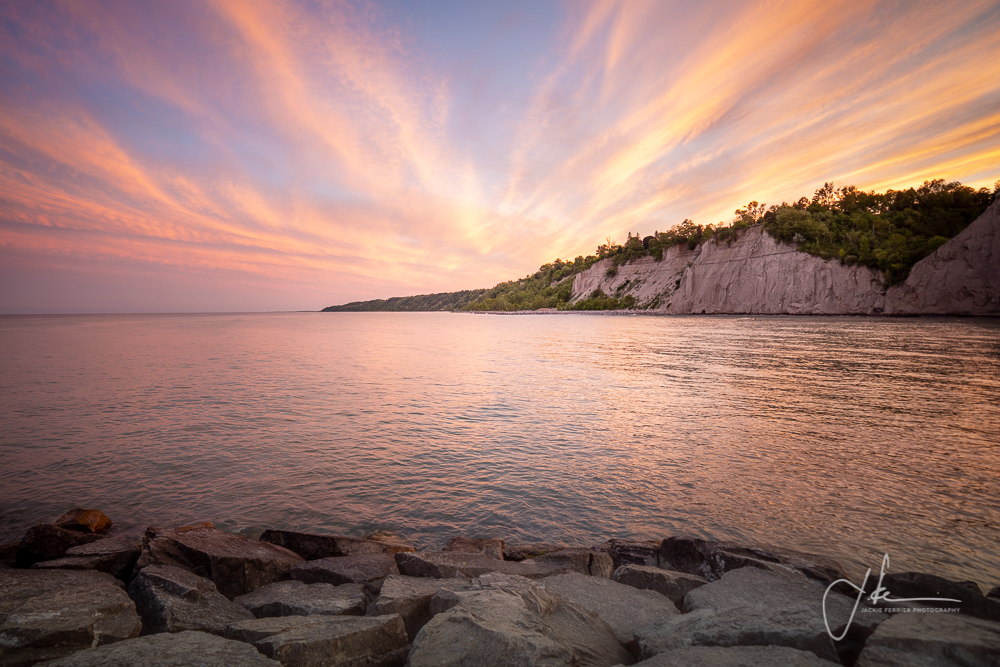
    I took this image of this sky of gold before the pandemic but it seemed appropriate and matched the album artwork.

    Music and lyrics below.

    Dreamlands

    Lyrics of Dreamlands – by Still Corners

    I know there’s a long road
    They told us it is unknown
    If we wait too long then we’ll never go
    I know where the sky is gold

    It’s getting dark but we’re so close
    It seems far but we’re not alone
    If we turn back now then we’ll never know
    We’ll go where the sky is gold

  • We Are Human Beings

    I don’t know how I stumbled upon Hi Ren, but I was absolutely transfixed. I could image being in a darkened theatre seeing this on the stage, feeling that electrical chill of the silence in the aftermath of a performance like this would bring, the long pause before the deafening applause. I just love it on so many levels.

    Art should comfort the disturbed and disturb the comfortable.

    Hi Ren, the most obvious or maybe easy interpretation is that this is about mental health. But I think the struggle that exists within us all, acknowledged or not, whether intense or not, is the reconciling of our dark with our light.

    Personally I feel the artist’s struggle with imposter syndrome. It’s all been done before. Who are you to think you have any kind of voice worth listening to?

    Art can take many forms. But the best kind for me is art that digs deep, finds something that purely yours, and uses the craft to tell that story. I feel that if you can do that authentically – then your art become immune from criticism; criticism becomes meaningless. Easier said than done, of couese.

  • In the Middle of the Night

    I’ve had parts of thisStill Corners — Slow Air album on repeat to the extent that I thought I was dreaming it, and would catch myself with a mishmash of fragments in my head. Which one is that fragment from, the sad one? The hopeful one? And why that one? Is my subconscious trying to send me a message?

    I don’t even remember adding this album to my playlist. I thought my daughter introduced me to it, but no. Because it’s not house-y upbeat music, I often skip it in my playlist. I’m already introspective, I don’t need music to help me get there. But the album was waiting for me at this particular fork in the road where I needed to stay embedded in the tension of challenging decisions, searching for solutions that didn’t exist and saw me out the other side where I realized there is no frictionless path.

    The first on this album, In the Middle of the Night, was one of those songs that I had this instant reaction to. A recognition of something that I lack the words to describe and can’t express. Like something buried wanting to be seen and here it is hidden in plain sight.

    It is reference in the song to the drums and the deer, and the idea of following your path in the middle of the night; the pursuit of whimsical desires and the quests for deeper experience at times and in patterns that perhaps don’t make sense to others. I keep running up against that in small ways.

    It evokes my rabbit head images, or perhaps the ones that wanted to be made. What drew me to make them is from a kind of playful disturbance, a dissonance that I am interested in. In music, dissonance can refer to notes that feel unstable or unresolved — they create a kind of friction that often “wants” to move somewhere more settled. But we encounter all kind of dissonance in our lives. We often struggles between what we want and our values. Or what we believe of ourselves to be and who we actually are.

    I think it’s useful to explore this, to move away from judgement and suspect rationalization and allow us to sit in discomfort, or consider the bringing together of elements that maybe doesn’t seem like to should be together. Anytime we can questions our assumptions or expactation seems like a good thing to me.

    I used to show some of these rabbit head images at the occasional art fair along with my landscapes. I’ve learned that the rabbit head images either speak to you or they don’t, you either have a sense of humour or an appreciation for the bizarre or you think I’m a bit mad. If you don’t get it, well I hope you can accept that I am just different you.

    But it’s the music itself, in it’s lush complex layers that forms the base of which the vocals and lyrics are nestled into that in-between feeling. If I hear it too much, I expect in time, that kind of weird dopamine hit I must be getting from it will subside. But not yet.

    That it coincidently references my nocturnal winter wakefulness this year is beside the point. 😉

    In the middle of the night
    Said she wanted to go
    In search of a sound
    She still wanted to know

    She could hear the drums
    She could hear the deer
    In the middle of the night
    It was all so clear

  • Untitled

    Sometimes, the “high road” is just a lonely, uphill walk.

  • Underneath

    I would have been 7 or 8 years old when this picture was taken of me by my elder sister. We were on a family camping trip out west; my father was taking photographs across Canada for landscape paintings he might later paint.

    I had written a whole thing around it.

    Felt it was better left unsaid.

  • The Time Change

    It’s the time of day that if you have the lights turned on, it looks dark outside.  But! If you turn the lights off, it’s dark inside.  Twilight.

    But then outside everything is lit with strange blue glow that makes you feel that right now is a moment that doesn’t belong to day or night.  It’s a liminal time; a time people usually don’t pay attention to, or if they do, and if they feel it, perhaps they feel a strange kind of sorrow. A friend of mine once remarked on this during a drive in the country. A confirmed urban city guy, he said, what do people do out here. At the time I thought they’re probably inside making dinner, or any number of evening activities. But I knew what he meant. It’s a liminal time, and it’s a liminal light. Civil, nautical, astronomical twilight. And the birds, they were chatty about it.

    As I contemplate this light this particular evening, maybe because the time had recently changed, and so now the light had shifted in my usual day schedule, and so this almost-light captured my attention, as I contemplated, I imagine someone coming into the house then. The door must have been unlocked or maybe they had a key. And maybe it’s not someone, maybe it’s you.

    And there I would be.

    Not a single light on in the house. I’m standing in the dark like a crazy person.  What are you doing, you, or they, would ask me.

    I would, most likely, be caught off guard, and I would feel the weight of my thoughts, and the weight of your question, and the lack of ready-made words then, and I would gesture helplessly at the window and say something kind of unsatisfactory about the light. You, or they, would be like:

    the what?

    But I think you, or they, would quickly realize that there was nothing very exciting about whatever it was, and would move on to whatever it was you/they were thinking about doing when you/they entered the house; before I was seen standing there; before you, or they, had their own brief flashes of wondering about what was going on; why the heck in the dark,

    what are you doing, that’s weird

    (but is it?), flashes of thoughts that would quickly vanish just as quickly as you/they moved on to their own thing whatever that would be. And the spell I was under would be broken, but the remements of mood would remain.

    And how could I tell them, or maybe you, there was something really special about the outside light right now – can’t you see?  Couldn’t you tell?

    You see it every day. What are you talking about? Every day. Nothing special. Regular day. I’m sure you must have heard the birds on some level, but your brain rendered the sound as non-essential, no reward or threat there, you do not have to pay attention to that.

    the birds? What birds?

    The light. That intense close blueness, that …

    What IS that about the light at that time of day, the almost-dark, but not quite dark, but the presence of it dark? It’s liminal light because you don’t stay out in it. You turn on the lights. You dash it away. The artificial lights blinds you to it instantly.

    I am in the magic of the almost-dark.

    I’ve experienced that liminal light as the light of ten year old summer children. When we were out playing, and it was getting “dark”, but the adults were doing forgetful adult things, and maybe the streetlights hadn’t quite come on yet, but we were ten, and we were out in the almost-dark, and shadows were deeper, and everything became colourless, and monochrome blue. And exciting.

    As a child we felt on the edge of something, and our friends laughed just a little bit harder, and there was just a bit more frenetic energy about us all, and we knew it was just a matter of time before the adults caught on that we were out in the dark. and spoiled our fun. But us, we see, and we were safe, and as children feel, we felt we had an unnamed, unidentified superpower that allowed us to see what the adults could not in the now secret world that belonged only to us, the children of the moment.

    How could I tell a person who walked into my house about the magic of that liminal light that had me captured? Light that maybe you, or they once intimately knew, but was buried in the recess of your, or their, mind.

    How could I describe how I was watching the silhouette of birds fly low in the neighbours back yard and listening to the birds.

    I was listening. I was thinking about how in the summer, and I saw those dark shapes dash around in the sky that I thought they were bird in the dark, but they were bats. But this evening these were birds, and I was listening to a sound that felt like spring, to a sound that felt like the birds were, just like we were as children, present, one with it.

    The birds were excited.

    It was almost-dark time.

    But it was not summer. It was March. And the clocks had just changed. And I get to thinking about that. 

    I admit, I think about these kinds of things more than I care to admit out loud, but my mind is on the birds, on wildlife in general; what do they make of the time change?

    Of course, what do they know about time, you might ask, what do they know about clocks?  Or that it’s changed? That an hour, (what’s that), just went somewhere?

    But at least twice a year things shift for those in the wild. They must know something is different. One day patterns in the world shifts, one day the world wakes up earlier, goes to bed earlier.   For no apparent reason. The sound of traffic, the smells, the lights, the movement of humans, the activity, all the same, all shifted.

    And these animals, birds, squirrels, rodents, that only live a couple of short years, well, their whole lives must feel like the length of whole lives if you catch what I mean.  Their perception of time must be based on that yard stick. That means that it’s only a few times in their lifetime that these things shift. Mysterious events.  And I think about this, because I am captured by mysterious events. Because I like how magic is all around us if only you think about it differently.

    If you, as a robin, for example, are living say, just two or three years, and two years is the yard stick by which to slice a whole life into measurable moments, well, even a whole hour must be a significant amount of time.  And the whole shifting thing must seem so arbitrary.  And so synced. Like – all the humans, all of them, they all shifted. Do they wonder how we are all so coordinated in our chaos?

    Why now, why today, the robins must wonder.  What else is going to happen?

    There is something about this feeling that I imagine the birds have that I like. I come back to these feeling states again and again the way you run your tongue over a gap in your mouth where a tooth once was, a tooth you took for granted, didn’t feel, and never once thought about beyond you daily brushings and trips to the dentist, now takes up room in your mind with it’s absence.

    This feeling that turns over, like when you lift a rock to see what’s underneath, like maybe when the hairs on your arms rise up or on the back of your neck, whatever it is for you, this transition. This feeling that maybe isn’t so sudden, but maybe more like the slow dawning of a realization; that once realized, you cannot go back. It’s not necessarily a good feeling, but certainly it’s an arresting one.

    Something happened. Something is happening.

    I don’t want to say it out loud because I don’t want to bring certain things into being, but these are the feelings I have a fascination for. Some kind of something, some change, some shift, some upheaval to the routine, an opportunity to experience life differently, a change. A turning point. A liminal point.

    I like to think about how superstitious animals might be about things like this. Why did the whole world suddenly change in this inexplicable way – things all seem the same, but the light is different. We feel different. 

    I like to think of what sense they try to make of it.  What were the signs that brought this change on – the weather? The thing that happened earlier — what??  How do we predict it next time? Do they have a sense of foreboding, or is it more like, ok, that’s weird.  But whatever.  Like walking in on someone who is standing in their house doing what appears to be nbothing in the dark. What are they doing.

    Or maybe for them it’s more like, in animal form, of course, am I tripping?  Didn’t this all happen at a different time yesterday?  No? I don’t remember. Ok, whatever.

    I like to imagine what a life must be like not measured by external clocks, and tedious domestic tasks, and excruciating tax returns.   In the case of birds, I like to imagine just how completely different they think and perceive simply because they live in the up and down, as well as horizontal planes. Like what does that do to a mind? I like to think of their freedom. At least I like to think about the freedom of it at first.

    I like to think of them unbound, but mapped out by the borders that shape out our lives, our driveways, our sidewalks, and lawns we don’t really walk on. I like to imagine how they perceive our backyards, not as individual enclosed rectangles of arranged space, but instead swaths of long patches of backyardness, strips of green spaces, punctuated by gridlocked fences and other random backyard things, this one with a small rectangular artificial pond, and this one with – is that thing a tent? While this one still had the most social tree.   

    What is that like? Not see a fence as a fence. What was it like to ride the slide of air that slips over tree and around the shed. If we could tap into that, how would we feel about these things that are so commonplace that we barely notice them? How would that change how we think, the way our thoughts are shaped, the drifts of our dreams.

    But when it comes to the wildlife, freedom inevitably evolves in reality, for I am never that far away from the dark. I don’t like to think of a life foraging in the winter. Then the freedom doesn’t seem free at all. No, I don’t like to think of that at all for the birds and animals, even though this winter wasn’t so bad for the cold as other winters have been.  For I tap into those moments of a trapped experience, trapped by pain, trapped by circumstance, where time crawls its slowest, when you think you cannot bear it a moment longer, and yet you must, you have to, you do.

    It was swans that impressed upon me the most how miserable it must be to tolerate the bite and gnashing of the Canadian winter and you have no other choice but to tolerate it.  Swans live a long time compared to a robin, somewhere like 15-20 years in the wild. That’s a lot of winters. Long winters.

    I felt the misery deeply for no other reason of the sheer irritability of one swan, and the biting cold of the time I observed it. Everything about this swan said unhappy. I’ve never seen an animal in the world that just seemed so… cantankerous. That’s a hard winter.

    I remember watching the ducks and geese fly in from all around at this time of day/night, the time of almost dark where everything was so blue and close. Honking and calling, the birds came skidding down from the sky into the water from wherever they scattered to during the day. The birds would collect together in the water over the period of a maybe a half an hour around a boat slip at Bond Head or some such place like that somewhere on the edge of Lake Ontario, in the dead of winter. 

    Sometimes we would feed them, delighting in the way humans delight in making an animal respond to something we’re doing. We are still children at heart.  Look at them eat! Oh, that one gets none, and try as we might, the bully birds don’t give that one with a missing foot much chance to eat. I remember that foot, and the slight phantom physical pain it would give me. I tossed the food into the mass, but then as quick as I could, tossed another handful farther and farther away from the hoard in the direction of the lame thing, hoping to give it a fighting chance for this night. Don’t mess with nature, but there we were, messing.

    There would be two, maybe three swans in the large bird group that consisted mostly of mostly ducks and Canadian geese.  I found it interesting they huddled together. We sat there with our canned drinks in the car sipping with the sun dipping even lower and lower beneath the edge of earth minute by minute. We watched them and we drank, for we too were in a liminal space of time, we were in a kind of betweening of here and there of both in time and space and life.

    The aggravated swan took a dislike to one of the mallard mandrake ducks huddling nearby, and took to snatching at its chest feathers, plucking them out. I imagined that was a sensitive spot on a duck for a plucking, particularly in the freezing cold. Back the fuck up, duck.

    The duck would back off, but in a short amount of time it either forgot, or hoped the swan did, and would adjust itself surreptitiously and in doing so slowly creep closer, until the swan in all its impatient irritation, went for it again, darting its head forward, to pluck out more chest feathers of the poor duck. The duck didn’t learn. It appeared to be doomed to repeat the cycle, back up, creep close, there was some kind of dysfunction there.

    It wasn’t that the swan hated the ducks.  It just hated this particular duck. I thought about that too.

    They all looked the same to me, but I did not have the sensitivities or sensibilities of a swan. What was so offensive about this particular duck? Because other ducks were positoned even closer to the swan. All ignored. Was it the way the particular duck held it’s head, flapped a wing, it’s obsequious way to attempt to get back into the good graces of the swan bully?

    Whatever it was, the swan just could not abide by it. Perhaps when not forced in to such close quarters, the swan might not have been bothered. But it in brutal harsh winter, the swan was not having it with this duck

    I don’t like to think of this winter struggle, but I do.  Petulant, huffy, testy, enraged. They’re all out there trying to survive. It’s not just, turn up the heat, add another blanket. I think about how that cold that Lake Ontario water must have been, and yet still must be warmer than the air because it was not yet frozen. That’s the warmth you were pursuing. And once that water was frozen you would climb onto the snow, tucking your feet im, enduring because it wasn’t killing you off yet, because that is all there was, huddle up, and wait until the slightly warmer warmth of dawn.

    I thought about how, as a glorious swan, you must slum it out with the Canadian geese and the annoying ducks and that if you were lucky enough, a drunk human or two might come by and throw down some bread and seed for those birds that were the most aggressive of them to have.  If you were lucky enough to survive the winter.

    And these are the kinds of thoughts that I think in the dark of my house, when I wander around in the magic of the almost-dark, and the silhouette of birds swooping around, and the new spring sound of excited birds, but excited maybe because the time just changed. Excited maybe for spring. Maybe for life.

    These are the kind of thoughts that I might share if I am not caught off guard or if not needing to be on guard, thoughts that seem mildly amusing or quirky when a person might first get to know me, but that maybe become perplexing and vexing, maybe if you had to live with me. Because what seemed kind of interesting then, seems like work to listen to, work to think about now. That person probably have other things to think about. Practical things. Things that need doing. I understand. I know who you are.

    And I can’t explain to you that while I know the day-to-day things must, of course, be done, that this is not just the mindless musings of birds or some made up blither-blather about the light. And yes of course, there are things I should be doing, too and I bet that could annoy some people because what about my priorities, here? But I lack the words to describe the importance of it, and why this is a priority and why the this and that that needs to be done are just the mechanical trappings of what we think life is, it’s not real life. The knowledge driving this are stuffed down so hard that the words become mashed together for a reason. And even if I could fluff them back up into words and put space into them for you, and even if I could articulate them in such a way you’d feel it and understand, you probably have things to do, and this is your life.

    I will likely have a reaction then. A stuffing back down, maybe, depends on who you turn out to be. But more I might react with an unmet need to wake you up. I know we must walk around in our sleep-walk life. Things do need doing. I know we must be switched off for so much of it, know that more than you might expect. I know we cannot be turned on all the time. I cannot live in the raw state all the time.

    But do not let it slip away, I want to say to you. This life. This magic. This miracle of living. Be present to it. Feel it. When it comes to the end you will not care about the lists and tasks. You will care about the birds. You will care about the light. You will wish you turned on sooner. I feel the ache for those that feel it too late. I feel it.

    But the person that walked in, might not have been you, or might not have been someone, just anyone. Maybe the person would have been M. I imagine that if M wondered what I was doing, it would have been like, what are you doing, but in a conspiratorial way, like I might have a secret to share, like something exciting might be going on, exciting like the raccoons were up to something fascinating, something baffling like the earth just shook, or there was something in the middle of something about something – what is it? Tell me, M might say.

    These light thoughts, these bird thoughts, these in between thoughts, these almost-dark thoughts are the kind of thoughts I would share with M. who would probably riff with me on this or that, go somewhere I hadn’t thought of, or land on something I had exactly thought of and our mutual bird wonderings would wind around each other and lead us to some other place, and there we would probably be in the dark together, discussing and wondering, then when an hour went by, it’s no longer twilight and we didn’t get things done. And we’re hungry, and like almost every time we are together, we would be wondering where the time went. And damn, if there wasn’t an hour there somewhere, where did that hour go? I guess the time changed.

  • Exclusive Guest Pro Clinic with Ahad Raza at the Pickering Squash Club

    Really enjoyed putting this highlight together from the clinic with Ahad Raza at Pickering Squash Club. This is exactly the kind of sports storytelling I enjoy — fast-paced, authentic, and about seeing the visual moments that build the story and shaping it in the edit.

    I love trying to capture what makes sport special — the energy, effort, and feeling of being part of something bigger as athletes push themselves and improve. (And of course, being about squash just makes it pure joy for me).

    Thanks to Ahad Raza (who is just lovely), the players, and our Pickering Squash pros who made it a great day.

  • The Stories We Tell Ourselves.

    I could probably write a hundred different things with this title. A thousand, maybe.

    But this is about a special friend I had since childhood. Today would have been her birthday.

    I have been fortunate to have a people in my life who I befriended that remained friends all throughout my life. L. was one of them. I don’t remember how old we were when I first met her, I don’t remember it at all. It could have been four, maybe five. I really don’t know.

    Of course there have been gaps here and there in our friendship. L. left Canada fairly early in our adult lives as I did myself much shorter period of time, and we lost touch. But social media grew and reconnected us, and we remained in touch ever since. When she came back home to visit family and we got together, it was almost like no time had passed. A connection between two souls, a recognition.

    But since she died close to two years ago as a result of her health problems, things changed. I have struggled to make sence of my feelings and my choices, and her choices.

    Movies often portray approaching death in a way that indicates we all develop a wiser understanding and learn to forgive and repair just before death. While I am sure this is the case for some, and I have witnessed first hand that some grievances stay grievances, that there is no wise understanding, no life-affirming forgiveness, some things just stay broken.

    Deep down, in the heart of my less evolved self, I’ve been mad at L. for — as I saw it — a kind of giving up, or giving in. That’s just one of the things I’ve been mad about. I should state that was my perception. Not reality. I don’t know what the reality was. Also, my use of the word “mad” is not meant to be crazy, but a word I would have used as a kid to describe angry, but not as angry as angry. And maybe that’s appropriate since the majority amount of time I spent with her was as a child.

    It’s not at all fair to her that I feel this way. And having gone through my husband’s cancer and death, and maybe also in having kids, it really should have been a lesson I learned, and clearly I didn’t: a person’s life is clearly a deeply personal journey that only they themselves can live and take responsibility for. To some degree we can influence that, but we cannot live anyone’s lives for them, we can’t possibility deeply understand what it’s like for them, the hidden forces that drive them. We don’t even know ourselves that well.

    Perhaps I don’t like to think of this because it makes me feel that existential loneliness that I try, at times desperately, to keep at bay. Instead it’s easier to stay on the surface and just be mad and judge them, and judge yourself for being mad and judgey.

    But part of what I was angry about — though I  couldn’t have articulated it clearly at the time — was the sense that chose not to take action based on a narrative she held about her situation. Not a narrative I could fully see or understand, and certainly not one I was in a position to judge, but a way of framing things. A way of coping. I felt, rightly or wrongly, that it was a story that didn’t serve her, or at least not in the way I wished it would. I felt frustrated by it. Helpless in the face of it.

    I started with wanting to write a tribute and then this frustration was what it seemed I was going to write about and did for a bit. But in the process of writing, a push through a realization that was something about me: my choices, my story, and a feeling of having done something wrong — of being wrong. I realized my anger was not just anger, but that it had a function entirely separate from what I was actually angry about.

    The anger was distracting me from paying attention to something that I was not able to really forgive myself for. Something I didn’t really want to admit to to myself because it was coming up against a carefully curated self-image that we all grow for ourselves.

    She called me, I think — I don’t even remember. I should have called her back. I didn’t. At least I didn’t until it was really beyond fashionably late.

    It is sort of a minor thing — or maybe it would have been if she hadn’t been struggling. But that lack of choice came up against my values and who I believe myself to be as a person and a friend; reliable, caring, and wanting —trying— to do the right thing. Did I try? I didn’t.

    When we can’t forgive ourselves, we often can’t fully take responsibility for it either. For me it my choice (or lack thereof) became a kind of a sort of “yes, but…” “I know I should have, but…” “I didn’t because…”. Over and over I justified my own lack of action. A kind of loop that would not get closed. I really didn’t want to look at it. Sometimes we do look at the things we judge ourselves for, and then punish ourselves for it. And weirdly – we still aren’t taking responsibility for it. In fact I know it can be easier to tell yourself what a terrible person you are (this can be a seed for depression, or over-work or other things that don’t ultimately serve us) because the punishment is easier than owning it.

    Instead I resisted calling her. I procrastinated, and when I came up against that I should, my mind slipped off it to other things, and put it off some more. Later, later, later. I should, I should. Only when finally the self-recriminations were greater than my resistance for calling, I finally called her back. She registered it with an indirect something that I took to be betrayal.

    I let myself be angry about that, too.

    I had my narrative. The defence I rehearsed. My justified grievances I never really expressed because there wasn’t the place for it. The idea that this was not a big thing — maybe later the realization that she could have called me. Maybe even later the realization that something could have happened to me. We patched things up. I gave an excuse rooted in the truth but not the whole truth. She pretended to accept it. On we went.

    Months later perhaps, she had a party for people on a Saturday I attended. A dull grey day. She seemed more herself than I had seen her, buoyed by her friends and loved ones around her. By the end of the weekend she was dead.

    We forget that our slippery minds lead us into making those choices that maybe go against how we think of ourselves, just as much our slippery mind criminate ourselves for having made them. And of course our slippery minds are just as involved in the cover-up because we don’t like difficult things.

    We all carry shame – the function of shame being that we learn to behave ourselves to the extent so that other people will like us enough to help us survive. We have all been scolded children, we have probably all experienced the shock and dismay of being judged and or reprimanded for something we thought was perfectly ok to do. There has always been some kid on the school yard that amplified this for one of us, whether we were the victims or just the witnesses. We have been the subject of disappointment when we have not measured up. And I suspect we are hardwired with the deeply primal terror of not being found worthy enough, and the burden of knowledge knowing that we are utterly dependent on less than perfect beings. And then a great many of us have had to create a construct for replace the security of unconditional acceptance that should have been there. It’s a convoluted tangly mess we all have wrapped up quite tight that our vulnerable selves fiercely protect from our rational conscious version of ourselves.

    I don’t think we can not see into our personal versions of this space unless the distress we are currently feeling is great enough that the distress of visiting this place is not that much harder. But still, even to the most blind and oblivious of us, that personal space of ours is percolating away, there contributing to our present feelings, thoughts and actions. Messing about.

    I sometimes write to loosen up these things that I sense I should let go of. But I didn’t intend to do this here – I intended to write a tribute. I could not give a tribute. I was mad. But sometimes I try to start with the one thing that I can’t shake and end up on another more difficult truer thing.

    We tell ourselves stories to make sence of things and to give meaning to this chaos we call life. Because without meaning we go down the slippery slope of existential dread. Some of us do anyway. Instead I would like that we should try to understand and forgive ourselves and forgive others for these stories that don’t always serve us. Compassion. Humility. But I’m still a little bit angry. And I still haven’t forgiven myself fully. This is not quite done.

    But the loop that was going round in my head got closed a little. Not just for myself, but for her too. I have freed up space to be able to think of my friend with the love and admiration that I had for her, and feel the sadness of her loss in the world.

  • 2026, The Question of Art

    This website has gone through many phases, but in its last incarnation was a focus on my photographic work. I really wished I could have pursued was the art work I started. It was, at the time, maybe the most real thing I have ever attempted to do. But with the ever-exhausting pursuit of money I could no longer justify the time.

    And then things changed. I changed, the world changed. Artificial intelligence is here. And it made me to reconsider what I was doing from an creative perspective and what I wanted to do. I had done these digital pieces, wind, fire, water, all I needed was earth. I knew what it looked like, but I couldn’t figure out how I was going to do it. Now I think the window has closed. AI closed it for me. All that work seems like a folly now when I could have just prompted for something that was even better than my own vision.

    I fully believe that within this new emerging world, there is a place for artists. I think a subset of people will increasingly long for authenticity and depth. A search for a mirror. As as we become more and more fragmented and disconnected, more connection perhaps. A reassurance that we are not as alone as we probably actually are in this universe.

    Or not. Humans’ ability to adapt is remarkable. I believe this adaptation starts with our perception, how our personal lens on the world frames things, and the way in which we justify our actions, and the way in which we normalize our experiences. Maybe art is becoming an esoteric indulgence. Maybe it always was. Or maybe, as I hope it is, art becoming wound into our entertainment.

    But even if it us, I worry that perhaps, instead, the audience for art is changing. Some of us, a lot of us, have developed this insatiable need for ) entertainment, or is it stimulation, or is it distraction, or is it boredom relief). The things that affect and move us, the way art can do, do. But then it also float on by in the rushing stream of content. The work that gives you pause for thought is quickly replaced by the next thing, and then the next. There is no real time for reflection. Do we even want to reflect?

    It’s not that we have fundamentally changed. It’s that we are faced with an onslaught of emotional experiences we simply aren’t equipped to process in real-time. We swing from the cutest baby rabbits to video replays of people being gunned down in the streets—granting a silent permission to the rise of hatred and the objectification of everyone around us. These are the hidden forces of psy-ops, manipulating us like marionettes on strings. We don’t even realize it’s happening, yet there we are: scrolling, scrolling, scrolling. We scroll, we do this for breaks.

    Then, exhausted, we retreat into the safety of the loop. More baby rabbits, please. Oh, that was funny. Look at that amazing talent. Oh my god, that’s so sad. Oh my god, that’s CRAZY! And yes, that ad—that’s new, where can I get that? Whoo, a roller coaster. We become vulnerable, we become lead to places we might not have gone. But then the roller coaster of it gets numbing.

    There will always be people who are set apart: The thinkers, sensors and observers of this world who see and who develop thought provoking commentary. But I also don’t rule out that our society and our culture as a whole will look unrecognizable in an alarmingly short period of time. But then, nor do I rule out that the architects of this current coordinated chaos, who profit from our division and thrive on our distraction, will eventually be struck by the very pendulum they set in motion.

    I find all these things deeply fascinating. I feel we are in the center of a very turbulent time in history. I feel a bit more thrill than I know I should. But is there a role for art in all this? Or is this just more distraction?

    I was left with the question of art that I don’t even know how to articulate. Are we in the sunset period of it, or is it just me? I was already doubtful of the purpose of it except as it is wound into film and television and music. This unasked question is challenging for me. Because in those quiet dark moments I’ve had, after a few glasses of wine or maybe something else, when I really get brave and ask myself – what the fuck was the point of this life, of all this struggle?

    And the little voice, (the little accusing voice, I might add), tells me it was to do The Work ( — capitalized, note. Like it’s something).

    The Work is not … like real work that can be traded for money, mind you. And to me that already points to it’s lack of value. Oh, don’t get me wrong, I know how much art can be traded for. But I also get that this trade isn’t really about the art of it either.

    And it’s not about doing the shopping, the cooking, the cleaning, the mowing, the shovelling, the enduring, the coping, thankless task kind of work, thankless but has clear value. That’s probably why I thought why this thing I was wrestling and trying to do became capitalized in my head – to justify its importance. The Work was this compulsion of mine to express some kind of essence of an idea of what it meant to be human. I think. The hard parts of being human, the awe-inducing part of being human, the messiness of being human, the wordless part of being human.

    I mean, honestly, humans have such a tendency to justify and rationalize so I couldn’t even be sure of that was what I was doing. Whatever it was, it was a compulsion, and an effort, and certainly I can categorically attest that there was a lot of work to it, and I can attest that it was honest as it could be.

    This expression is your purpose, this is the the thing you had to offer, the voice whispered.

    My response to that was: Well, if that’s not a lot of ego-infested, self-indulgent slop. This is the thing I have to offer a world that really has no need for it? That, I answer back, is worth nothing. No one will convince me it is. Where did that voice even come from?

    Well time moved on. Bills piled up. Nothing like the demanding practicalities of life to slap you in the face and tell you to wake up. Delusional. Wake up.

    And despite this, over and over again, it’s this thought that not having honoured this is what makes me feel I have squandered my life. I didn’t get it because I was in conflict over it. But it sliced at me. There has been a profound despair when I had the bravery, or maybe it was the misery, to look at it directly. So occasionally when time allowed, I tried to answer my calling, but it was half-hearted. I was not a believer. I got lost. I’m afraid it’s a trick in my head, this thing that’s calling me. A trick of the ego. A leftover of some identity formation in my youth that is evolved into the very human need to believe there is something more than this… this struggle.

    Oh. How very human of me.

    Perhaps, you have not understood, the voice persists. I know what that voice is doing, I declared to myself. It’s calling me a coward. I know. It’s right. I am afraid. I get it! Stop hounding me! It wants me to be more real, more direct. Take a risk. Woman up.

    No. I said I got itm but I didn’t get it. I was blocked by something I was blind to.

    So many years ago I remember a boyfriend asking me this, what is the point of it. I stood there like an idiot, probably with my mouth open. My father was an artist. We lived among painting, in fear of paintings, (knocking a pile of them stacked against the wall on the floor over because you had been running around like a hooligan resulting in a certain amount of shouting), I had been instructed to spend a certain amount of time going out to draw. My identity has been coiled around my talent. I got denied the opportunity to go to art camp by my father because he decided I didn’t practice enough – even when a scholarship was offered to me to go. What was the point of it? I don’t know – it just was.

    I don’t think that question ever really left me. My father made his living painting the canadian landscape in work that he sold all over Canada. I was neutral about most of it. Even while I wanted to get into theatre and direct, even when I wrote, even when I designed, photographed, even when I went to film school (film was much easier to justify), even as I took art history classes which kind of maddens me now, but certainly later in life when I could not easily justifying the time of my pursuits, the question lingered. What was the point, really? If it’s not entertainment, if it’s not decorative, if it doesn’t have value except to other artists.

    Apparently (apparently because I have not gone to the source on this) psychoanalyst D.W. Winnicott is quotes as saying, “Artists are people driven by the tension between the desire to communicate and the desire to hide.” That makes a lot of sense to me. So there I go hiding in plain sight, doing my thing talking around the thing that I’m talking about. So is this just an exercise in self-indulgence then? Is this just a mental health wellness activity? Great. I got better things to do, Voice. (pointing finger at inner meddlesome voice)

    “Art should comfort the disturbed and disturb the comfortable,”

    Banksy

    But as I thought (too much) 😉 (just kidding, only you think I thought too much, I think I thought the perfect amount) …

    But as I thought about this quote, it’s only now that I considered the role of audience. If an artist is driven by the tension between the desire to communicate and the desire to hide, how is the audience implicated in this? What is the audience’s role?

    AI presented me with this: Validators of Vulnerability. You know what I thought this meant? Artists are validating your vulnerability. I like this better than the actual description I misread.

    I remember some of the things that people have reached out to me about over time. A response to some things I have written, some of the things I’ve made, things that got unlocked for people perhaps. I don’t remember what they said. What was left with me was this desire to seek me out, to share something real with me. It wasn’t about my work. It was about them.

    And there it is. That is what I am looking for. Had I not been paralyzed by the idea of folly, what would have told you I wanted was to move people. To move people as I have sometimes been moved. I could not, and probably still cannot articulate why. I really don’t know – I have no ah-ha feelings about it.

    It’s not that art does this for all people or even should do this for people. Some enjoy playing detective, and enjoy the discussion of what it can mean. I enjoy visiting art galleries with people who think and reflect on art like this. There’s value here, I suppose, but it is just a pastime, a intellectual pursuit and and catalyst to discuss big ideas with people.

    I am more interested in the personal. And so, while I don’t know what’s next in my creative journey, something became a little bit more unlocked for me. A better idea of what has been whispering to me in the dark.

  • 2025 Tournament Highlights

    Had an amazing time capturing the energy and drama of this year’s Hanebury squash tournament at Pickering!

    🏸
    🔥

    It’s always fun getting creative with video in such a fast-paced environment. Couldn’t be happier to combine two of my favorite things: playing squash and video editing!